
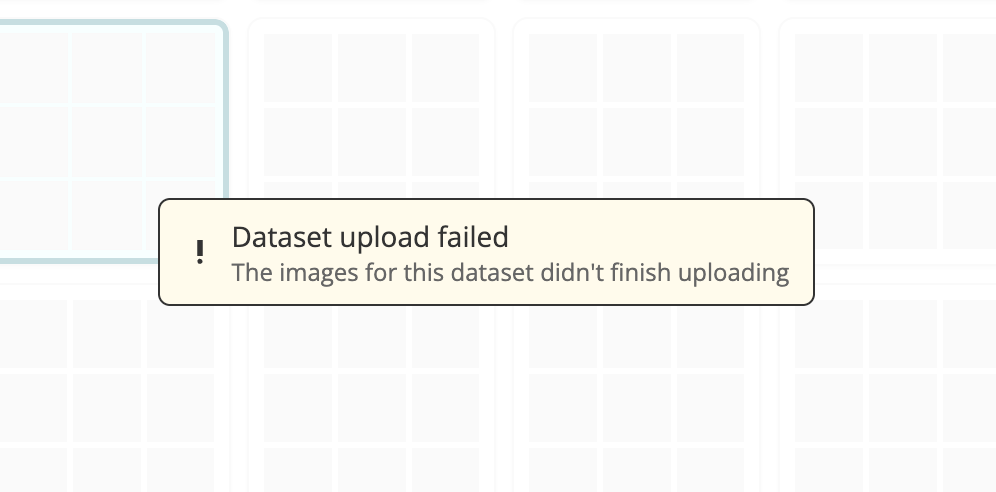
Opening a plate right after an upload started used to look like something broke — the page treated the not-yet-existing sprite as a load error. It now recognizes that images are still on their way and says so clearly, and once the upload completes the page refreshes automatically with the new imagery, no manual reload needed.
Going back to a plate or well you'd already opened used to reload every image again, even ones you'd just seen. Now those pages open instantly. And if an image was still on its way when you left, it shows up on its own as soon as it's ready, so you never have to hit refresh to see the latest picture.
Not every imaging run covers a full rectangular grid. When a Keyence BZ scan skips positions on the stage grid — imaging only the wells or regions you care about — the resulting montage is sparse or non-rectangular, and previously those scans were flattened into a single-row layout that didn't reflect what was actually captured.
The agent now reads physical image dimensions and tile coordinates directly from the scan metadata, so each tile is stitched into its true position on the montage. Sparse layouts, rectangular layouts, and single-row scans all render with the correct geometry, and tile positions travel with the imaging metadata so downstream tools can work with the real stage layout.
When a plate is imaged as overlapping Keyence montage tiles, Plate Montage View previously cropped each tile to its center and placed them edge to edge. Because the tiles genuinely overlap, every seam repeated features that appear in both neighbours — cells and colonies near a boundary could show up twice. The well page never had this problem, since well images are properly fused mosaics, so the two views disagreed about the same well.
Stitched View now renders a true stitched plate image built from those same fused well images. The plate view and the well view finally show the same thing, and features near tile boundaries appear once, where they actually are.
Image sharpening now holds constant strength as you zoom and pan, instead of fading out at high zoom or producing oversized halos.
Invitation links that have expired or already been used now explain what happened and prompt you to request a new one.
Moving between wells and plates keeps the plate barcode, minimap, compass, and culture status on screen while the next page loads.
Stitched plate sprites now pack as soon as every well image is ready, instead of waiting for someone to load the page.
Missed-dataset upload now recognizes the cellshot instrument type.
Datasets are now checked for missing files and folders before upload, and clearly marked invalid with an explanatory error instead of retrying indefinitely.
The OKO chamber driver now survives serial disconnects — status polling degrades to last-known telemetry and reconnects automatically instead of halting the workcell.
The well page now distinguishes generating, load error, and unavailable states for well images instead of showing one blank state.
Stitched View and FFT bandpass can now be used together, showing a filtered stitched plate image when ready.
Metadata keys containing double underscores are now rejected as you type, preventing keys that could never be filtered or added as a column.
